
kayak size guide
Kayak Size Guide: Finding the Perfect Fit
Navigating the world of kayaks requires understanding that a “one-size-fits-all” approach simply doesn’t exist. Kayaks are diverse, shaped by length and purpose, offering options for every paddler and waterway.
Understanding Kayak Types and Their Size Implications
Different kayak designs cater to specific paddling styles and water conditions, directly influencing optimal size choices. Recreational kayaks, often wider and shorter, prioritize stability and ease of use, accommodating a broader range of paddler sizes. Touring (sea) kayaks, built for longer journeys, are typically longer and narrower, demanding more precise sizing for efficient paddling and tracking.
Sit-on-top kayaks emphasize volume and width, crucial for stability and capacity, especially for anglers or those paddling with gear. Whitewater kayaks, conversely, are short and maneuverable, requiring a snug fit for optimal control in dynamic rapids.
Therefore, understanding your intended use is paramount. A leisurely lake paddle demands a different kayak size than navigating ocean swells or challenging river rapids. Considering these distinctions ensures a comfortable, safe, and enjoyable kayaking experience, aligning the kayak’s characteristics with your paddling needs and skill level.
Recreational Kayaks: Size and User Weight Capacity
Recreational kayaks generally range from 10 to 12 feet in length, offering excellent stability for beginners and casual paddlers. Their wider beams, typically exceeding 28 inches, contribute to this stability, making them forgiving on calm waters. However, size directly correlates with weight capacity; a larger kayak can support heavier paddlers and more gear.
Most recreational kayaks feature weight limits between 220 and 300 pounds. Exceeding this limit compromises stability and performance. Choosing a kayak with sufficient capacity is crucial for a safe and enjoyable experience. Consider not only your weight but also any equipment you plan to bring – fishing gear, coolers, or dry bags.
Shorter recreational kayaks are ideal for smaller paddlers, while longer models provide better tracking and efficiency for larger individuals. Prioritize a comfortable fit and ensure the kayak’s weight capacity comfortably accommodates your needs.
Touring Kayaks (Sea Kayaks): Length and Stability Considerations
Touring kayaks, also known as sea kayaks, prioritize efficiency and tracking over initial stability. Typically ranging from 12 to 18 feet long, their sleek designs cut through the water with less resistance, enabling longer distances and faster speeds; However, this comes with a trade-off: they require more skill to maintain balance.
Longer touring kayaks offer superior tracking – the ability to travel in a straight line – and are ideal for open water and challenging conditions. Shorter models are more maneuverable, suitable for navigating tight spaces and coastal inlets. Beam width influences stability; wider kayaks are more stable, while narrower ones are faster.
Experienced paddlers often prefer longer, narrower touring kayaks for their performance, while beginners may find a wider, shorter model more confidence-inspiring. Weight capacity is also vital, especially for multi-day trips with substantial gear.
Sit-On-Top Kayaks: Width and Volume for Different Paddlers
Sit-on-top kayaks are renowned for their accessibility and self-bailing design, making them popular for recreational paddling and warm-weather adventures. Width and volume are key considerations when selecting a sit-on-top kayak, directly impacting stability and weight capacity.
Wider kayaks offer exceptional initial stability, perfect for beginners or those paddling in choppy waters. However, increased width can sacrifice speed and tracking. Volume, the internal space of the kayak, determines how much weight it can carry without compromising performance or safety.
Paddlers should choose a kayak with sufficient volume to accommodate their weight, plus any gear they plan to bring. Lower volume kayaks are suitable for smaller paddlers, while higher volume models are better for larger individuals or those embarking on longer trips. Consider the hull shape too – flatter hulls enhance stability, while V-shaped hulls improve tracking.
Whitewater Kayaks: Short Lengths and Maneuverability
Whitewater kayaks are specifically engineered for navigating dynamic river environments, prioritizing maneuverability and responsiveness over speed and tracking. These kayaks are characterized by their short lengths and planing hulls, allowing paddlers to quickly turn, carve, and navigate challenging rapids.
Shorter lengths – typically ranging from 6 to 9 feet – enable tight turns and quick reactions to changing river conditions. The planing hull design helps the kayak rise up and over obstacles, preventing it from getting stuck. Volume distribution is also crucial; a higher volume in the bow aids in boofing (lifting the bow over rocks), while volume in the stern enhances control.
Choosing the right whitewater kayak depends on your skill level and the type of rapids you intend to paddle. Beginners often benefit from more volume and stability, while experienced paddlers may prefer shorter, more playful designs.

Factors Influencing Kayak Size Choice
Selecting the ideal kayak involves considering your weight, height, intended use, and body type. These elements significantly impact comfort, stability, and overall paddling performance.
Paddler Weight and Height: A Crucial Starting Point
Determining the appropriate kayak size begins with a realistic assessment of your weight and height. Manufacturers provide weight capacity guidelines for each kayak model, ensuring safe and optimal performance. Exceeding this limit compromises stability and maneuverability, potentially leading to dangerous situations on the water.
Height influences cockpit fit and comfort. Taller paddlers often require kayaks with larger cockpits to accommodate their legs and maintain a comfortable paddling posture. Conversely, shorter paddlers may find oversized cockpits awkward and difficult to control. A properly fitted cockpit allows for efficient power transfer and reduces fatigue during extended paddling sessions.
Consider your build as well. Broader individuals may prefer wider kayaks for enhanced stability, while those with a more streamlined physique might opt for narrower designs for increased speed and efficiency. Always prioritize a kayak that comfortably accommodates your body dimensions and weight, ensuring a safe and enjoyable paddling experience.
Intended Use: Matching Kayak Size to Activity
The primary activity dictates the ideal kayak size and type. Recreational kayaking on calm lakes and slow-moving rivers demands different characteristics than tackling whitewater rapids or embarking on multi-day touring expeditions. Shorter kayaks excel in maneuverability, perfect for navigating tight spaces and playful paddling, while longer kayaks prioritize speed and tracking, ideal for covering distance efficiently.
Touring kayaks, designed for extended journeys, typically feature longer lengths and narrower widths for optimal glide and stability in open water. Whitewater kayaks, conversely, are short and wide, enabling quick turns and precise control in challenging currents. Sit-on-top kayaks, popular for fishing and casual paddling, often prioritize stability and ease of entry/exit.
Carefully consider your paddling goals and the environments you’ll frequent. Selecting a kayak tailored to your intended use ensures a more enjoyable, efficient, and safe experience on the water. Don’t compromise – match the kayak to the adventure!
Body Type and Flexibility: Considerations for Comfort
Beyond weight and height, individual body type and flexibility significantly impact kayak fit and comfort. Paddlers with broader builds may require kayaks with wider cockpits and more volume to accommodate their frame without feeling constricted. Conversely, those with a slimmer build might find a narrower kayak more responsive and easier to control.
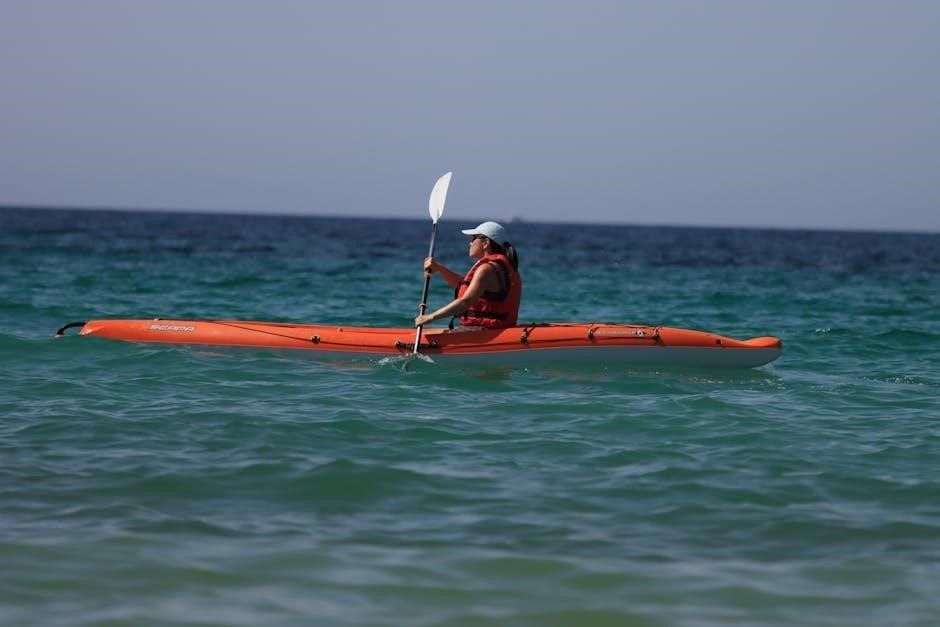
Flexibility plays a crucial role, particularly in sit-inside kayaks. Limited hip flexibility can make it challenging to achieve a secure and comfortable seating position, potentially hindering paddling efficiency and control; Consider a kayak with a larger cockpit or a sit-on-top design if flexibility is a concern.
Prioritize a kayak that allows for a relaxed, natural paddling posture. Proper leg and back support are essential for preventing fatigue and maximizing performance. Don’t hesitate to test different models and adjust seat padding and foot braces to find the perfect fit for your body.

Key Kayak Dimensions Explained
Understanding kayak dimensions – length, width, cockpit size, and volume – is vital for selecting the right fit. These factors directly influence performance and comfort on the water.
Kayak Length: Speed, Tracking, and Maneuverability
Kayak length is a primary determinant of its performance characteristics. Longer kayaks generally excel in speed and tracking – the ability to travel in a straight line – making them ideal for covering distances efficiently. This is because a longer waterline offers less resistance through the water.

However, increased length often comes at the cost of maneuverability. Shorter kayaks, conversely, are easier to turn and navigate tight spaces, though they may sacrifice speed. The ideal length depends heavily on your intended use.
Touring kayaks, designed for long journeys, typically range from 12 to 18 feet, prioritizing speed and tracking. Recreational kayaks, intended for leisurely paddling on calm waters, are often shorter, around 10 to 12 feet, emphasizing maneuverability. Consider how and where you plan to paddle when evaluating kayak length; a balance between these factors is key to a satisfying experience.
Kayak Width: Stability and Secondary Stability
A kayak’s width significantly impacts its stability, both primary and secondary. Wider kayaks offer greater primary stability – the initial feeling of steadiness when sitting on the water. This makes them more forgiving for beginners and suitable for calm conditions, reducing the likelihood of tipping.

However, increased width can also hinder speed, as it creates more drag. Narrower kayaks, while less initially stable, often possess greater secondary stability. This refers to the kayak’s ability to lean and respond to edging – a technique used for turning and maneuvering – providing a more confident feel in dynamic conditions.
Sit-on-top kayaks tend to be wider for enhanced stability, while touring kayaks are often narrower for speed. Finding the right width involves balancing initial stability for ease of use with secondary stability for control and performance.
Cockpit Size: Fit and Comfort for Different Body Sizes
The cockpit is the opening you sit in, and its size is crucial for comfort and control. A properly fitted cockpit allows for easy entry and exit, and enables effective paddling by providing a secure connection between the paddler and the kayak.
Cockpit dimensions vary significantly. Larger cockpits accommodate broader shoulders and larger hips, offering more freedom of movement. Smaller cockpits provide a tighter fit, enhancing control, particularly for advanced paddlers performing techniques like rolling.
Consider your leg length as well; sufficient space is needed for comfortable leg positioning and the use of foot braces. If you anticipate wearing bulky clothing, factor that into your cockpit size assessment. Ill-fitting cockpits can lead to discomfort, restricted movement, and even safety concerns, so prioritize a comfortable and secure fit.
Kayak Volume: Buoyancy and Weight Capacity
Kayak volume, measured in gallons or liters, dictates how much weight a kayak can carry without compromising performance or safety. It’s a critical factor, directly impacting buoyancy and stability.
A kayak’s volume must exceed the combined weight of the paddler, all gear, and a reasonable safety margin. Underloading a kayak can make it unstable, while overloading reduces freeboard (the distance between the waterline and the deck), increasing the risk of swamping.
Consider your typical kayaking load – yourself, paddle, PFD, dry bag, and any other essentials. Manufacturers specify weight capacities, but remember these are maximums. Choosing a kayak with ample volume ensures a comfortable and secure paddling experience, even in choppy conditions. Prioritize sufficient volume for your needs to enjoy your time on the water safely.

Sizing Charts and Recommendations
Utilizing kayak size charts based on paddler weight and experience is essential. These resources offer a starting point for selecting the appropriate kayak length and volume.
General Kayak Size Chart by Paddler Weight
Determining the right kayak size often begins with the paddler’s weight, as this directly impacts buoyancy and stability. Here’s a general guideline, though individual kayak specifications vary significantly.
- Under 150 lbs: Typically suited for kayaks 10-12 feet long with a width around 26-28 inches. Volume should be around 60-70 gallons.
- 150-180 lbs: A kayak length of 12-14 feet and a width of 28-30 inches is generally appropriate. Look for volumes between 70-85 gallons.
- 180-220 lbs: Consider kayaks 14-16 feet long, with widths of 30-32 inches. A volume of 85-100 gallons provides ample buoyancy.
- Over 220 lbs: Kayaks 16 feet or longer, with widths exceeding 32 inches, are recommended. Volumes should be 100+ gallons for optimal performance.
Remember these are estimates. Factors like kayak type (recreational, touring, etc.) and intended use also play a crucial role. Always consult the manufacturer’s weight capacity specifications before purchasing.
Kayak Length Recommendations by Experience Level
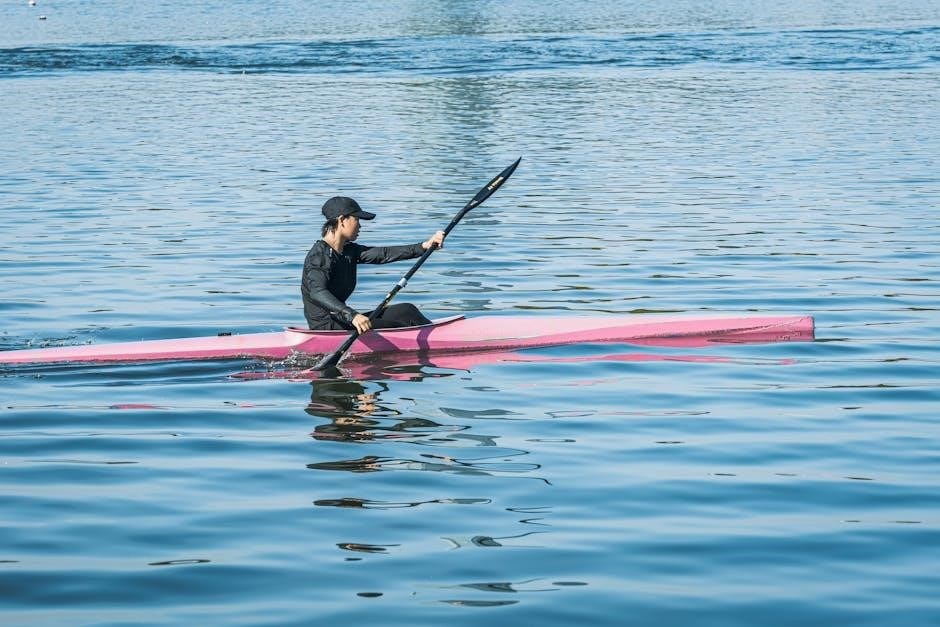
Kayak length significantly impacts performance and is closely tied to a paddler’s skill level. Beginners often benefit from shorter kayaks, while experienced paddlers may prefer longer models.
- Beginner: 9-12 feet. Shorter kayaks are easier to maneuver and feel more stable, building confidence on the water. They excel in calm conditions.
- Intermediate: 12-14 feet. This range offers a balance between maneuverability and tracking, suitable for varied conditions and longer paddles.
- Advanced: 14+ feet. Longer kayaks prioritize speed and efficient tracking, ideal for covering distance and tackling challenging waters.
Consider your primary paddling environment. Lakes and slow-moving rivers suit shorter kayaks, while open water and touring benefit from longer lengths.
Don’t overestimate your abilities. Starting with a manageable length builds skills and enjoyment.
Advanced Considerations
Beyond basic dimensions, rocker, material, and accessories refine kayak fit. Testing kayaks through rentals or demo days ensures optimal performance and comfort before purchasing.
Understanding Rocker and Its Impact on Performance
Rocker refers to the curvature of a kayak’s hull, significantly influencing its handling characteristics. A kayak with more rocker – a pronounced curve – excels in maneuverability, making it ideal for whitewater or playful paddling where quick turns are essential. These kayaks respond rapidly to edging and paddling strokes, allowing for precise control in dynamic conditions.

Conversely, kayaks with less rocker, featuring a flatter hull, prioritize tracking and speed. This design minimizes resistance, enabling efficient forward motion and a straighter course. Touring kayaks, designed for covering long distances, often exhibit minimal rocker to maximize efficiency. The amount of rocker is a crucial consideration when selecting a kayak, as it directly impacts how the boat responds to different paddling styles and water conditions.
Ultimately, the ideal rocker profile depends on the intended use and the paddler’s preferences. Understanding this relationship allows for a more informed decision when choosing a kayak that complements your paddling style.
The Importance of Kayak Material in Size Selection
The material a kayak is constructed from profoundly impacts its weight, durability, and overall performance, subtly influencing size considerations. Polyethylene kayaks, known for their affordability and impact resistance, tend to be heavier and slightly less rigid than those made from composite materials.
This added weight can affect how the kayak handles, particularly for smaller paddlers, potentially requiring a slightly larger volume to compensate for buoyancy. Composite kayaks – utilizing materials like fiberglass or carbon fiber – are significantly lighter and stiffer, offering enhanced responsiveness and efficiency.

Their lighter weight allows for easier maneuvering and potentially a smaller overall size for a given paddler. Inflatable kayaks present another option, offering portability and convenience, but material thickness and construction influence their rigidity and capacity. Considering the material’s characteristics alongside your weight and intended use ensures a well-matched and enjoyable kayaking experience.
Adjusting Kayak Fit with Accessories (Seat Pads, Foot Braces)
Even with careful kayak selection, fine-tuning the fit with accessories can dramatically enhance comfort and performance. Seat pads are crucial for extended paddling sessions, providing cushioning and support, particularly for those with pressure points or needing a more secure position.
Adjustable foot braces are equally important, allowing paddlers to customize legroom and engage their core muscles for efficient power transfer. Correct foot brace placement optimizes control and reduces fatigue.
Adding thigh braces, common in whitewater and touring kayaks, further enhances connection and maneuverability. Consider a spray skirt to seal the cockpit, keeping you dry and improving efficiency in choppy conditions. These seemingly small adjustments can transform a good fit into a truly personalized and comfortable kayaking experience, maximizing enjoyment on the water.
Testing Before You Buy: Renting and Demo Days
Before committing to a kayak purchase, experiencing it firsthand is invaluable. Renting kayaks allows you to test different models on your local waterways, assessing stability, maneuverability, and overall comfort in real-world conditions.
Demo days, often hosted by kayak retailers or manufacturers, provide a structured opportunity to try a variety of kayaks with expert guidance. These events frequently offer side-by-side comparisons, helping you identify the best fit for your body type and paddling style.
Pay attention to how the kayak tracks, turns, and feels when loaded with your typical gear. Don’t hesitate to ask questions and seek advice from experienced paddlers. A test paddle can prevent a costly mistake and ensure you choose a kayak that truly enhances your enjoyment of the sport.